
AlpiForma Journal
Materials, interiors & craftsmanship
The AlpiForma Journal brings together guides to sheepskins and natural fibres, care advice, contemporary alpine interior inspiration and the practical knowledge needed to choose pieces made to last.
We want to explain as much as we show. Understanding the difference between two fleeces, knowing how to care for a natural hide, choosing a throw for the way it will be used or creating a warm interior without resorting to clichés: every article should offer a genuinely useful answer.
Understanding materials
Origins, hair types, density, finishes and uses: guides to help you recognise materials and choose with confidence.
Caring for what is made to last
Brushing, airing, stains, storage, throw care and precautions for different materials: practical advice, without guesswork.
Creating a distinctive interior
Pairing fleece with timber or stone, working with scale, choosing the right proportions, introducing colour or warming a contemporary interior: inspiration is always tied to choices that can actually be applied.
Perspectives, discoveries & craftsmanship
The Journal also looks at how a material is worked: what draws our attention to a particular manufacturer, and what separates a beautiful finish from one that is merely acceptable.
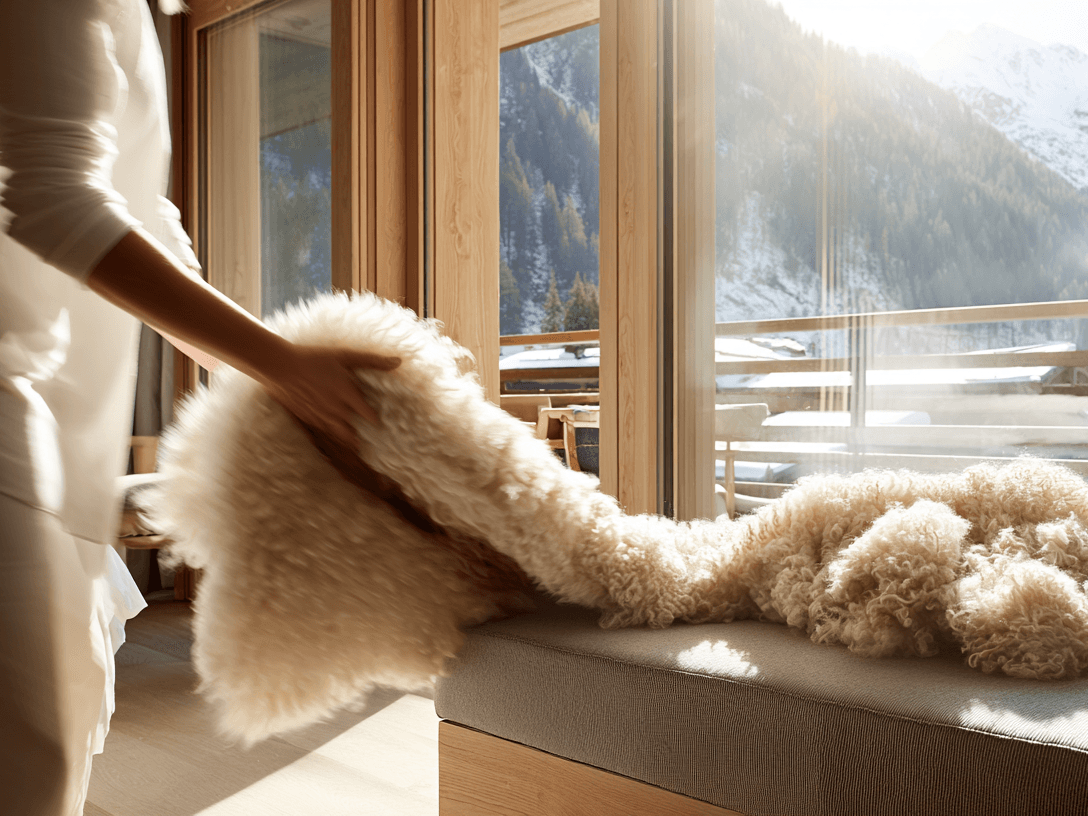
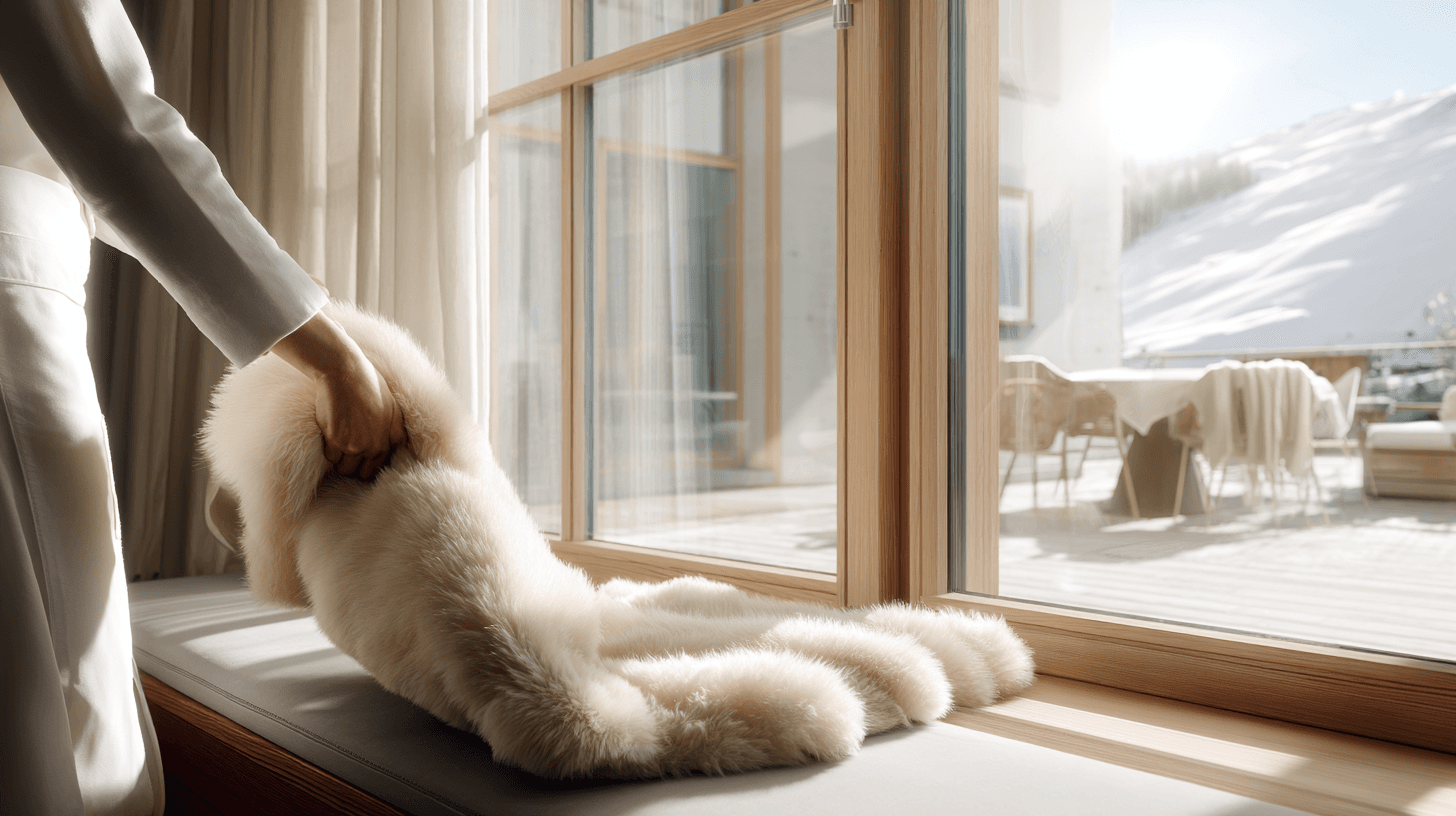
A natural skin needs far less looking after than people expect, provided you go about it the right way. The simplest habit matters most: air it regularly. A gentle shake, some fresh air and light dusting are usually enough to bring back its body and freshness.
With a mark, act quickly but never harshly. Dab with a clean cloth, slightly damp if needed, and never rub. The aim is to lift the soiling out, not press it into the fibre. Keep the piece away from direct sun, radiators, hairdryers and strong heat in general, all of which dry out the leather and cost it its suppleness.
For the most delicate pieces, particularly long-curled ones, avoid anything mechanical. Never brush a skin while it is damp, and when a deeper clean is called for, go to a specialist used to natural skins and furs. Care guidance for natural skins comes back to the same points: air it often, treat marks promptly, dry naturally away from direct heat, and be cautious about brushing or rubbing anything still damp.
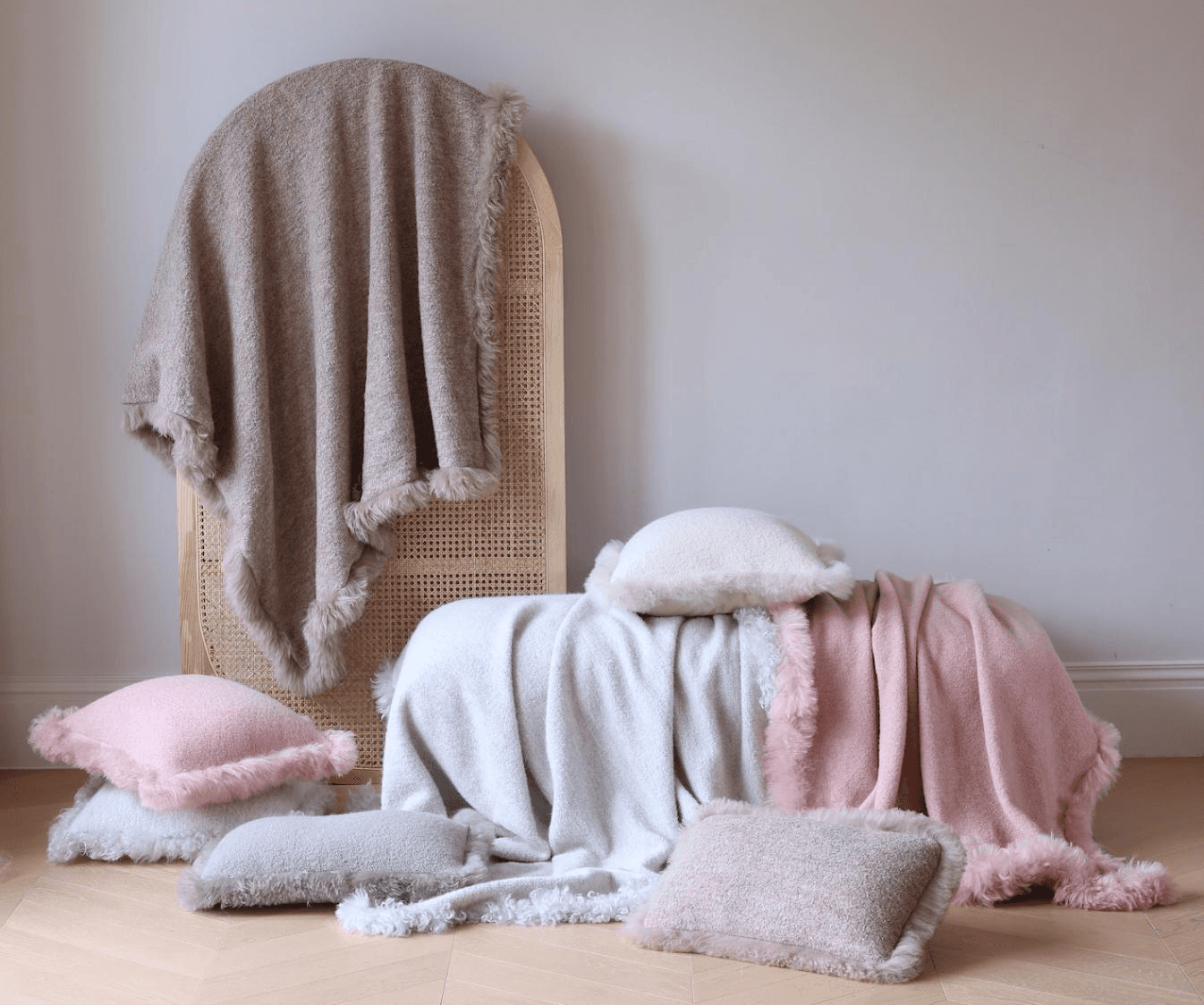
A good wool throw is not meant to be washed often. In most cases a proper airing is enough to freshen it. That is one of wool's real strengths: it soils more slowly than people assume and holds its shape well when looked after.
If a mark appears, treat it locally and promptly with lukewarm water and a mild wool detergent, without rubbing. For a full wash, always follow the care label. Where the throw is machine washable, a wool cycle with cold or very soft water is the safest choice. Dry it flat, or well supported, out of direct sun and never in a tumble dryer.
In short, a quality throw lasts better through measured handling than repeated cleaning. Woolmark's guidance says exactly this: air wool blankets, treat marks quickly without rubbing, machine wash only where the label allows and then on a wool cycle with a suitable detergent, and dry out of direct sun without a tumble dryer.
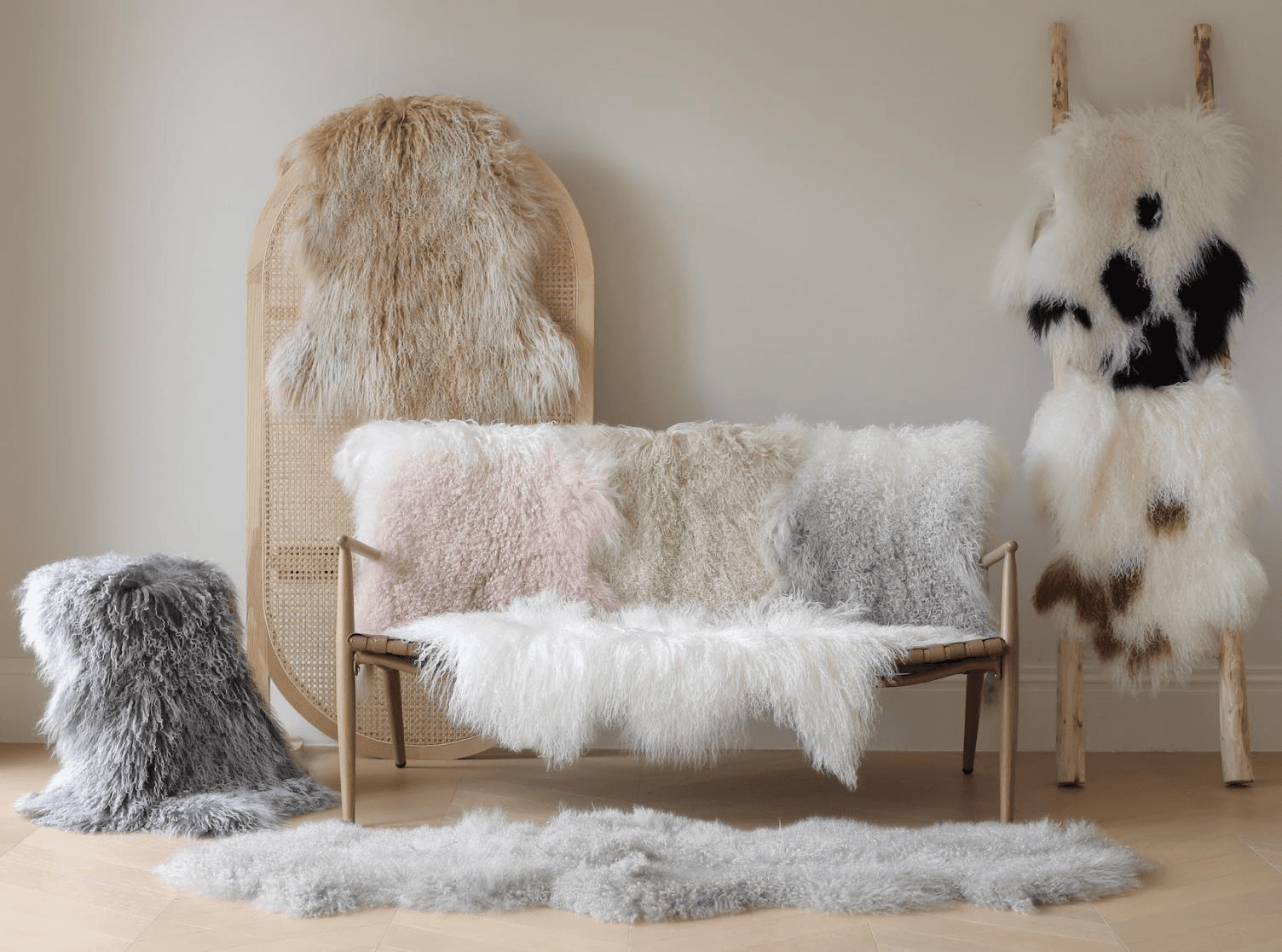
Choosing a material changes how a room is read, instantly. It is what gives a space its depth, its visual warmth and its tactile character. The AlpiForma selection rests on several strong families: Tibetan lamb, often called Mongolian fur, New Zealand sheepskin, goat and rabbit.
Tibetan lamb stands out for its movement, its soft curl and its very lively surface. It brings a more expressive, almost couture presence — ideal for a cushion, a pouffe or an accent piece. New Zealand sheepskin generally reads denser, more even and more structured, which suits decorative skins, rugs and certain seating particularly well. Goat gives a more graphic, sometimes more textured relief, while rabbit wins you over with an exceptionally soft, finer hand.
The right choice is therefore less about ranking than about use. For an enveloping, sophisticated effect, go for materials with real volume. For a calmer, plainer or more architectural reading, favour more even textures. The rightness of an interior often turns on exactly this nuance.
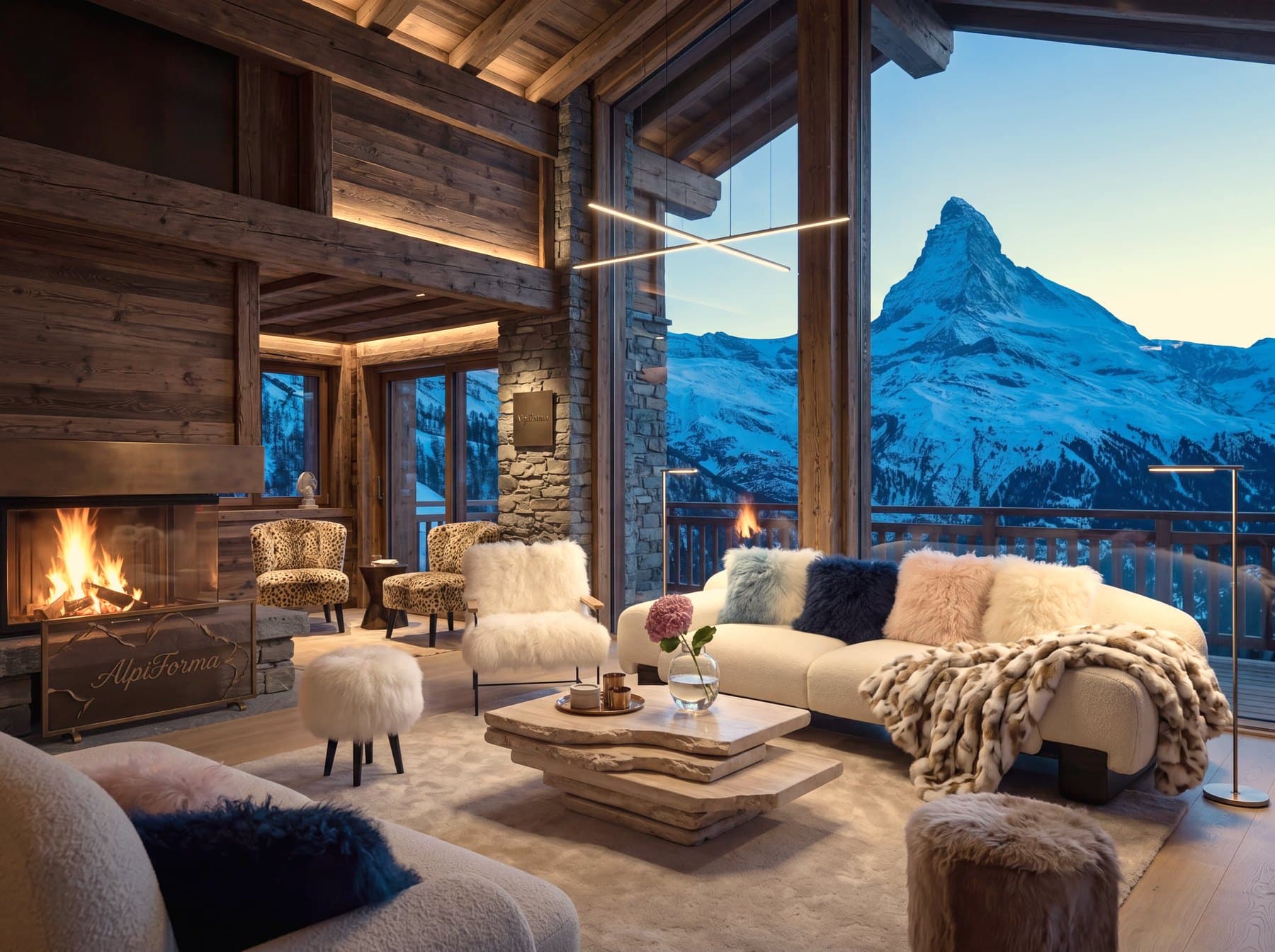
The most elegant contemporary chalet is not the one that piles up mountain signifiers, but the one that creates a feeling. That feeling comes from a precise balance of natural materials, restrained lines, comfortable volumes and a calm palette.
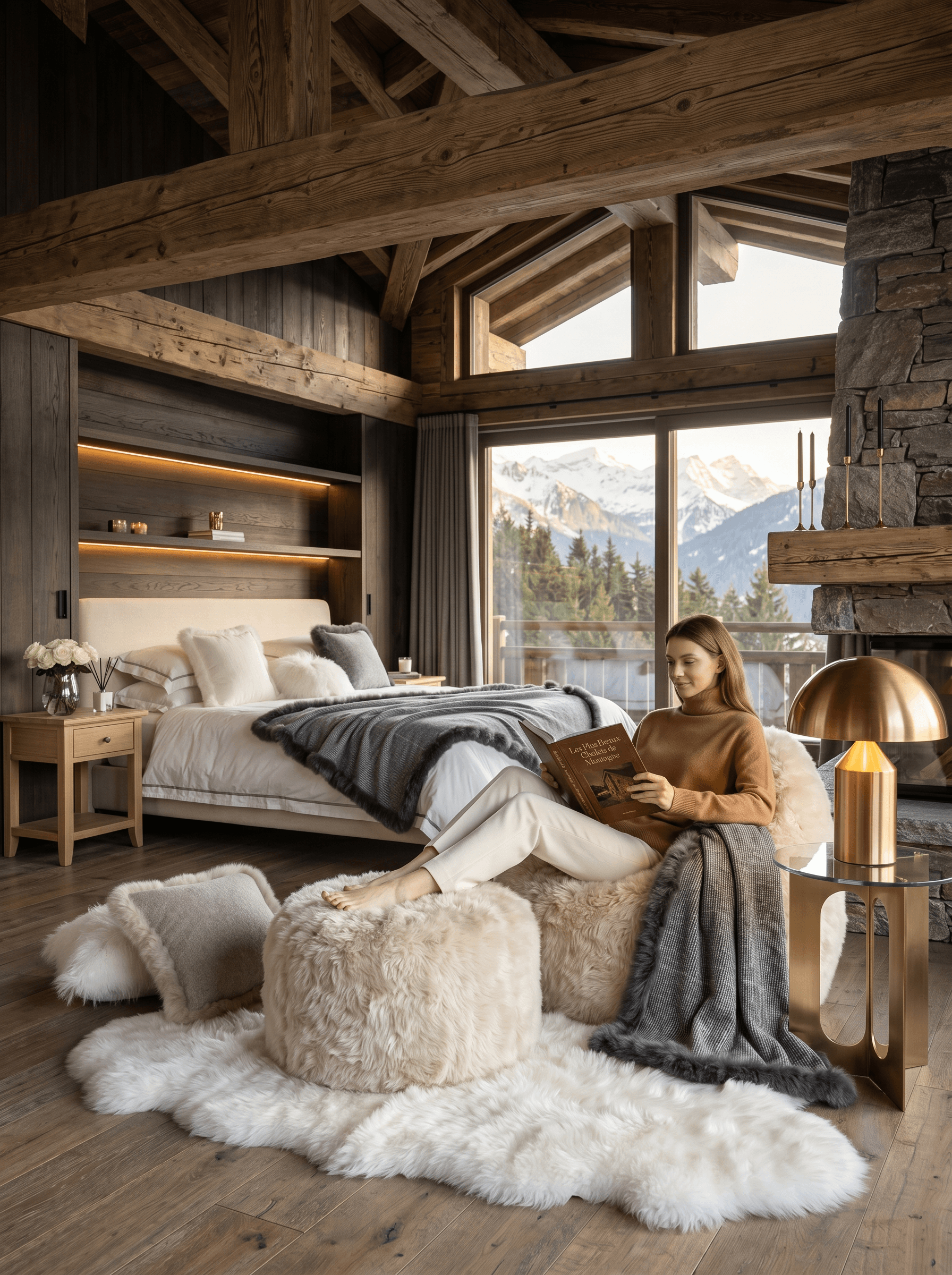
A handful of pieces is often enough: an armchair or pouffe that draws the eye, a well-placed skin, two or three cushions with texture you can read, a generous throw, and a coherent colour base. Ivory, beige, taupe, smoke grey, warm brown or charcoal create an enveloping atmosphere without weighing the room down. A bolder note can then come in small touches — a deep green, a powder pink, a camel tone.
The secret is not doing more, but doing it right. A successful room lets its materials breathe. It works through the subtle repetition of textures rather than a multiplication of objects. Luxury shows here in calm, in the hand of things, in comfort, and in how the scheme holds over time.
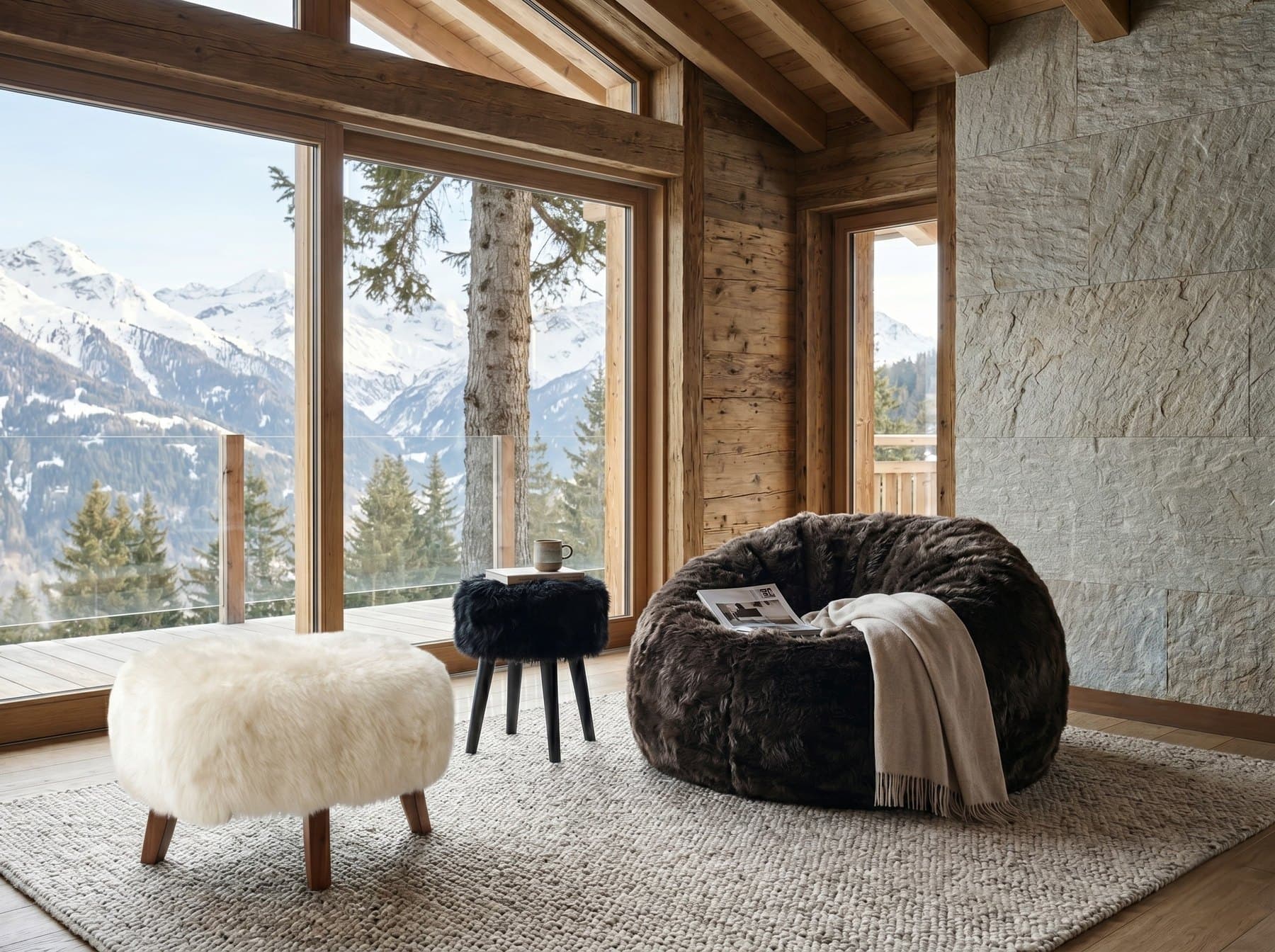
In a high-end interior, occasional seating carries far more weight than people assume. A well-chosen pouffe, stool or armchair does not only add comfort: it introduces a material, a shape and a visual anchor.
A pouffe works particularly well to soften a room, open up some breathing space or sit alongside a sofa and fireplace. A stool brings a lighter, more mobile presence and can become a highly effective decorative accent. An armchair creates a territory of its own: it invites reading, rest and contemplation, and often becomes the signature piece of a chalet interior.
The right choice follows the role you want it to play. To deepen an atmosphere, go for something generous and textured. To punctuate a space without loading it, a plainer but beautifully finished seat is usually more elegant. In every case the material makes the difference: it is what gives that immediate sense of luxury.